Quick answer
To create a digital product from PLR content, choose one useful source asset, tighten the buyer and promise, add original value, package the files cleanly and test delivery before launch.
What to prepare first
- PLR source content and license
- Clear target audience
- Supporting bonus or checklist
- A sales page and delivery system
- A final file package structure
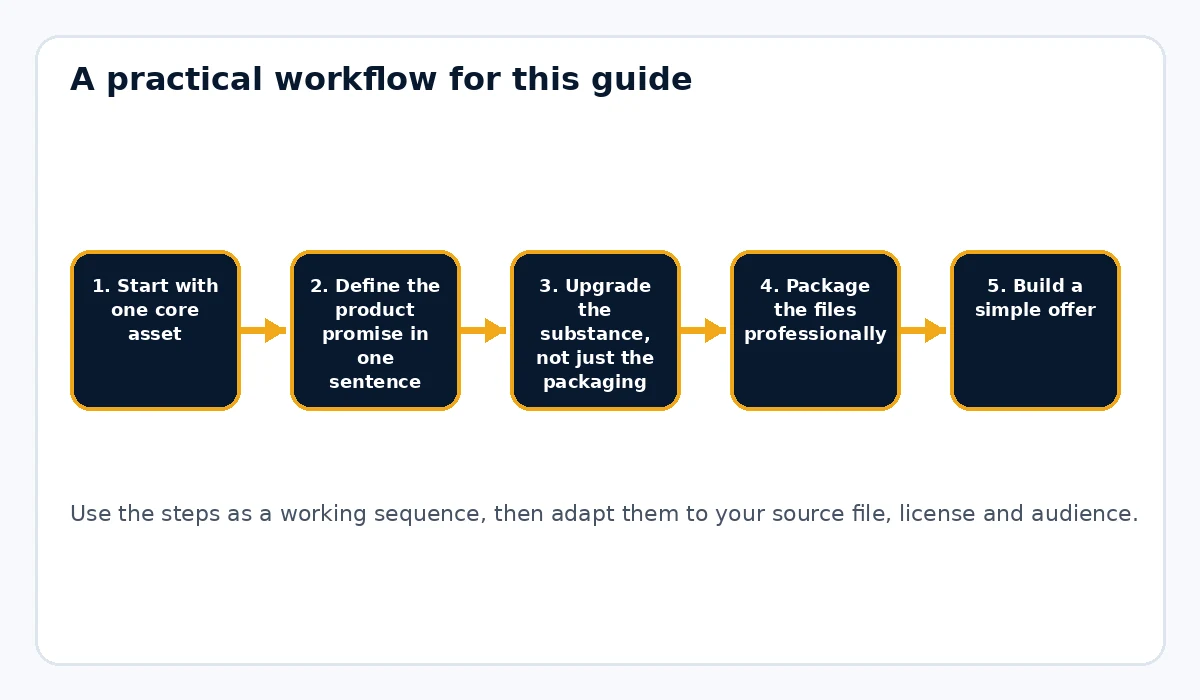
Start with one core asset
Instead of bundling every PLR file you own, choose one source asset that solves a clear problem. A focused product is easier to position, easier to improve and easier for buyers to understand.
Define the product promise in one sentence
Write a simple sentence that explains who the product is for and what it helps them do. That sentence acts like a filter during editing. If a section does not help deliver that promise, cut it or move it into a bonus.
Upgrade the substance, not just the packaging
Good digital products are not just prettier PLR files. Improve explanations, add examples, insert checklists or worksheets and remove the generic content that weakens the outcome.
Package the files professionally
A digital product should feel organized. Use clear file names, a START-HERE document if useful and a branded PDF format. Rebrand My PLR fits well into this process when the product includes guides, reports or workbooks that need a more polished PDF presentation.
Build a simple offer
Your sales page should explain the problem, outcome, audience, deliverables, format, delivery and purchase terms. You do not need to oversell a low-ticket product, but you do need to remove confusion.
Use bonuses carefully
A bonus should support the core result, not distract from it. One worksheet, checklist, swipe file or template usually adds more value than a random stack of unrelated PLR files.
Test the entire buyer experience
Buy your own product flow or simulate it. Check payment, thank-you page, delivery email, access page and file downloads. A solid product can still disappoint buyers if the delivery process feels sloppy.
Example product path
Take a PLR ebook on lead generation, narrow it into a 'Lead Magnet Starter Kit,' add a checklist and quick worksheet, export the main guide as a branded PDF and package everything with a START-HERE file for the buyer.
Common mistakes to avoid
- Trying to sell generic PLR with almost no improvements
- Bundling too many unrelated files together
- Writing a sales page that never clearly states the outcome
- Skipping delivery testing before launch
- Adding bonuses that confuse instead of strengthen the product
Build the product around one transformation
A digital product is easier to understand when it solves one defined problem. Start by writing the transformation in plain language: “This helps X do Y without Z.†Then evaluate the PLR against that promise. You may use only half of the original material. That is fine. A focused product that delivers one result is easier to explain, easier to price and easier for customers to complete than a bundle of unrelated content that looks large but feels confusing.
Create a simple product architecture
Decide what the buyer actually receives. The main guide might be supported by a worksheet, checklist and START-HERE file. Each item should have a job. The guide explains, the worksheet helps the buyer apply, the checklist helps them finish and the START-HERE file explains the order. Avoid adding bonuses simply to increase the file count. A smaller package with a logical sequence often feels more valuable because the customer knows what to do first.
Match the offer and delivery to the product
The sales page should use the same product name and promise as the files. State the format clearly so buyers know whether they are receiving a PDF, templates, software access or a bundle. Then test the complete delivery path: payment, thank-you page, email, download and file opening. If a customer buys from a phone, can they understand what they received? Product creation includes the delivery experience, not just the content inside the ZIP.
Practical example
A broad PLR ebook about lead generation could become a “Lead Magnet Starter Kit.†Use the most relevant chapters for the main guide, add a one-page idea worksheet and a launch checklist, brand the files consistently and package them with a START-HERE page. The sales page can now promise a specific outcome: choose, create and launch a first lead magnet. The value comes from curation, structure and usability rather than from the number of source pages.
Final publishing check
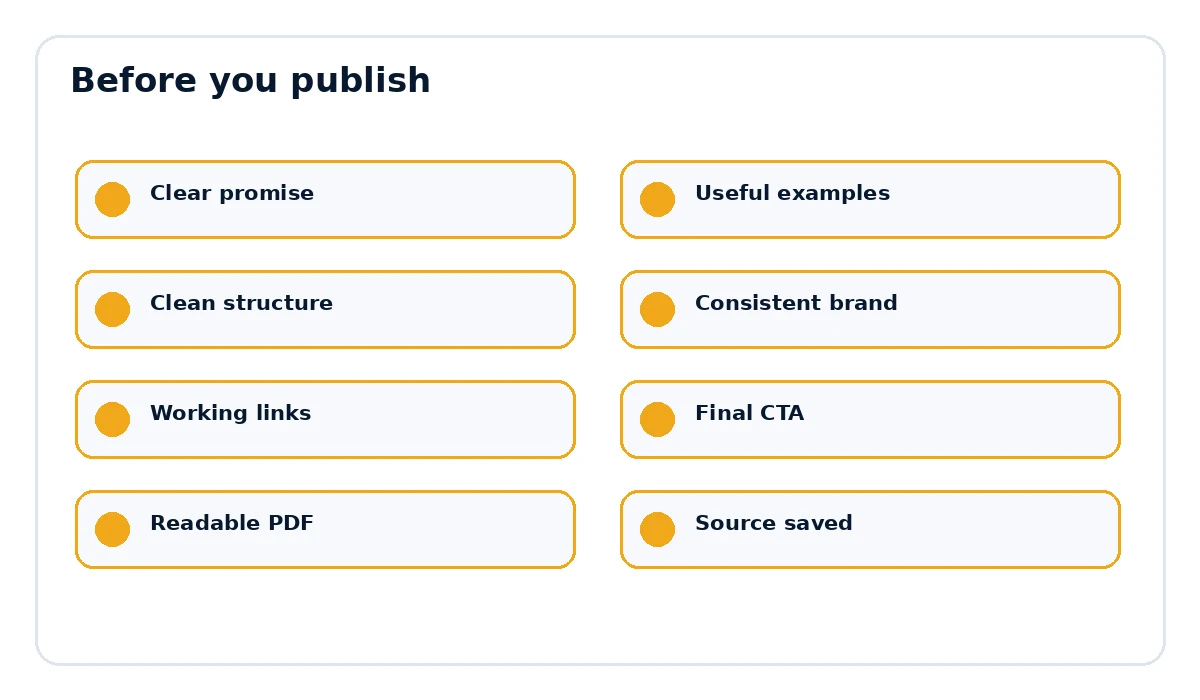
- The page title and document title match the actual promise.
- Examples, links and references are current and relevant.
- The document is easy to scan on desktop and mobile.
- The final call to action points to the correct destination.
- The exported PDF opens cleanly and every important link works.
Decide what makes the product worth paying for
Customers do not pay because the source material was PLR; they pay because the finished product saves time, reduces uncertainty or helps them reach a result. Before setting a price, list the improvements you made: tighter positioning, current examples, worksheets, templates, clearer instructions, professional packaging and a tested delivery process. If the finished offer still feels interchangeable with a generic download, keep improving it. A small product can be valuable when it is focused and immediately usable. The goal is not to hide where the starting material came from. The goal is to create enough useful editorial and practical value that the finished product stands on its own.
Want the final document to look like a finished product?
Rebrand My PLR helps turn Word, text and Markdown files into more polished branded PDFs with a clearer cover, cleaner sections and a stronger final presentation.
See Rebrand My PLRFrequently asked questions
Can I sell PLR as my own digital product?
Only within the specific rights granted by the license.
What is the easiest PLR product to create first?
A focused ebook, checklist or short guide is often the simplest starting point.
How do I make a PLR-based product more valuable?
Improve the positioning, content, examples, file packaging and overall buyer experience.