Quick answer
To rebrand PLR content for a specific niche, choose a tighter audience, rewrite the promise, replace generic examples, cut irrelevant sections and add one niche-specific asset.
What to prepare first
- The source PLR file
- A well-defined niche audience
- Examples or terms used by that niche
- A supporting checklist or worksheet
- A branded PDF workflow
Choose a niche you can actually describe
Specificity helps only when you can explain the audience clearly. 'Entrepreneurs' is broad. 'New coaches creating their first lead magnet' is much easier to write for. A narrow audience gives you better examples, clearer language and a stronger sales message.
Rewrite the promise around the niche result
The title, subtitle and introduction should sound like they belong to that audience. If the original PLR title is broad, make the benefit more specific so the niche reader can immediately see the relevance.
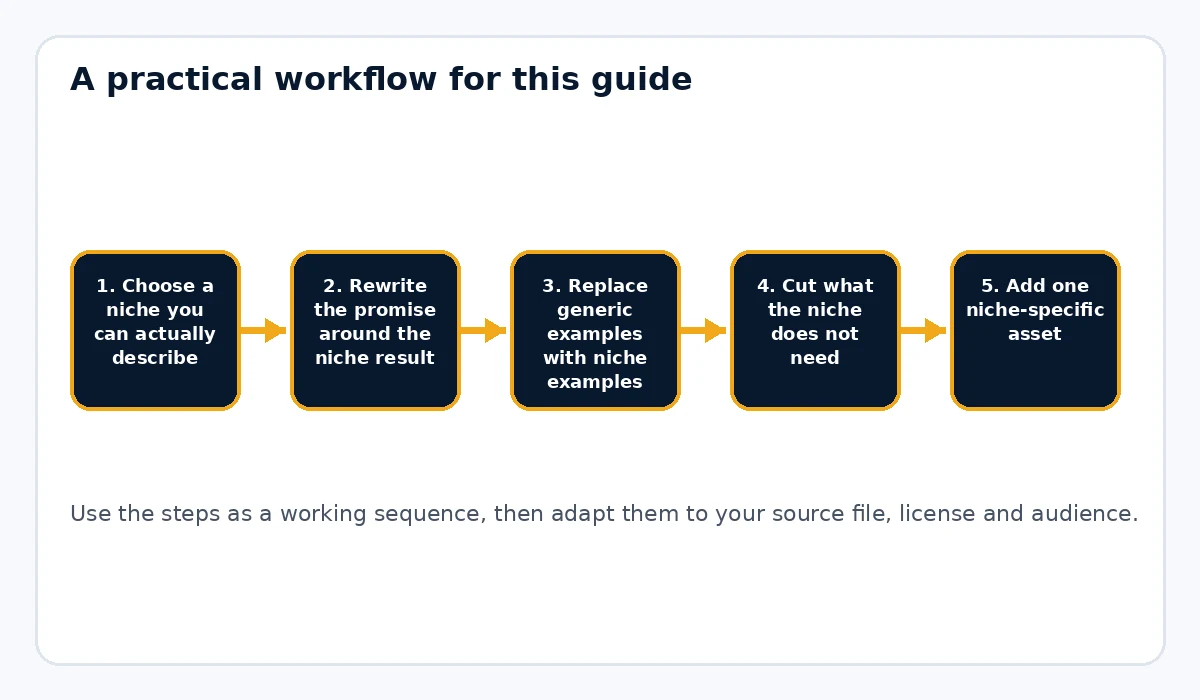
Replace generic examples with niche examples
This is one of the biggest upgrades you can make. Readers trust a product more when the tools, scenarios and language reflect their world. Swapping examples is often faster than rewriting entire chapters, yet it can change the perceived quality dramatically.
Cut what the niche does not need
A specific niche version should not carry every general section from the source product. Remove broad chapters that do not help the target audience achieve the promised result.
Add one niche-specific asset
A checklist, worksheet, template or glossary tailored to the niche can make the finished product feel much more original. It does not have to be huge. It just has to solve a real problem for that niche reader.
Package the final version with a visual style that fits
The look does not need to be totally different from your other products, but the wording, examples and overall feel should match the niche. Rebrand My PLR can help create the final polished PDF once the content has been narrowed and improved.
Align the sales page with the new niche angle
If the product changed, the pitch should change too. Lead with the niche problem and result rather than saying it came from PLR. Buyers care more about whether the product fits their needs than about where the source material began.
Practical example
A generic PLR guide on productivity could be reworked for real-estate agents by replacing examples, changing the cover and title, removing irrelevant sections and adding a short follow-up checklist designed for that market.
Why this can rank more easily
Niche-intent pages are often easier to compete with than broad PLR terms because the query itself is more specific. A new domain can benefit from covering narrower questions thoroughly rather than trying to outrank older sites for one head term immediately.
Common mistakes to avoid
- Adding the niche name to the title but changing almost nothing else
- Keeping broad examples that do not fit the audience
- Trying to serve several niches with one supposedly focused guide
- Skipping a niche-specific asset or CTA
- Forgetting to align the sales page or description with the new angle
Choose a niche from real problems, not just labels
A niche is useful when it changes what you would say. “Small business†may be too broad because the examples for a dentist, online coach and roofing company are very different. A stronger niche gives you recognizable situations, vocabulary and decisions. Look at questions the audience asks, tools they use and the result they want. If changing the niche name does not change the examples or recommendations inside the guide, the niche probably is not specific enough yet.
Rewrite examples before rewriting everything else
Examples are one of the fastest ways to make generic PLR feel tailored. Replace generic companies, budgets, tools and scenarios with ones that fit the target reader. Then review the instructions around those examples. You may discover that some steps also need to change because the niche has different constraints. This approach is more useful than performing a sentence-by-sentence synonym rewrite, and it keeps the final product focused on the reader rather than on hiding the source material.
Keep each niche version genuinely useful on its own
If you create several versions from one source, each should have a reason to exist. Change the promise, examples, supporting resources and final action so the version solves a real problem for that audience. Do not create dozens of nearly identical files that differ only by industry name. That produces a weak customer experience and makes maintenance difficult. A smaller number of genuinely adapted products is easier to support, update and promote.
Practical example
A generic productivity guide could become a version for independent real-estate agents. Replace office-worker examples with listing follow-up, client calls and open-house planning. Add a weekly pipeline checklist, remove sections that depend on corporate teams and adjust the cover and terminology to match the audience. The source concept remains recognizable, but the finished product now speaks to a real working context and offers a more specific result.
Final publishing check
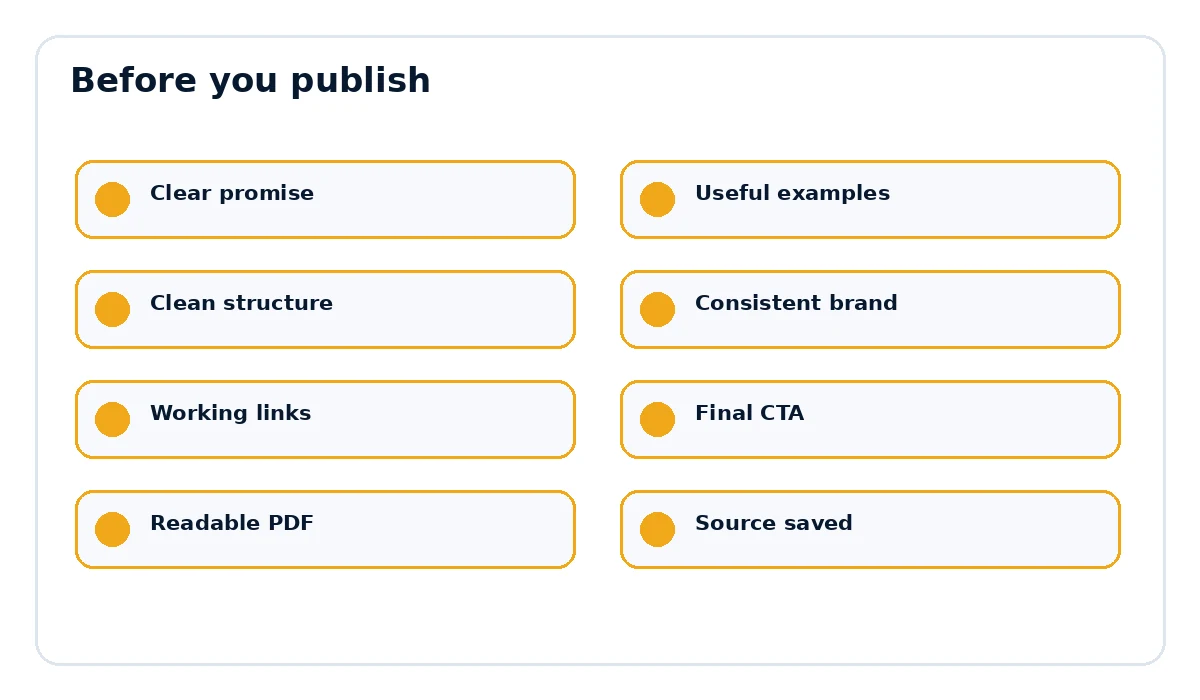
- The page title and document title match the actual promise.
- Examples, links and references are current and relevant.
- The document is easy to scan on desktop and mobile.
- The final call to action points to the correct destination.
- The exported PDF opens cleanly and every important link works.
Use the niche version to improve the offer, not just the document
Once the content is truly niche-specific, carry that specificity into the product description, email copy and sales page. The headline should name the situation the buyer recognizes, the examples on the page should match the examples inside the guide and the bonus material should support the same result. A niche document paired with a generic sales message wastes much of the work you did. Consistency between the promise, the product and the marketing makes the offer easier to understand and helps the buyer know quickly whether it is meant for them.
Want the final document to look like a finished product?
Rebrand My PLR helps turn Word, text and Markdown files into more polished branded PDFs with a clearer cover, cleaner sections and a stronger final presentation.
See Rebrand My PLRFrequently asked questions
How narrow should I make a PLR niche?
Narrow enough that you can write specific examples and a clear promise, but still broad enough to have a meaningful audience.
Do I need to rewrite every paragraph for a niche version?
No. Start with the promise, examples, terminology, irrelevant sections and one original addition.
Can one PLR source become several niche products?
Potentially, if the license allows it and each finished version is genuinely adapted for a different audience.